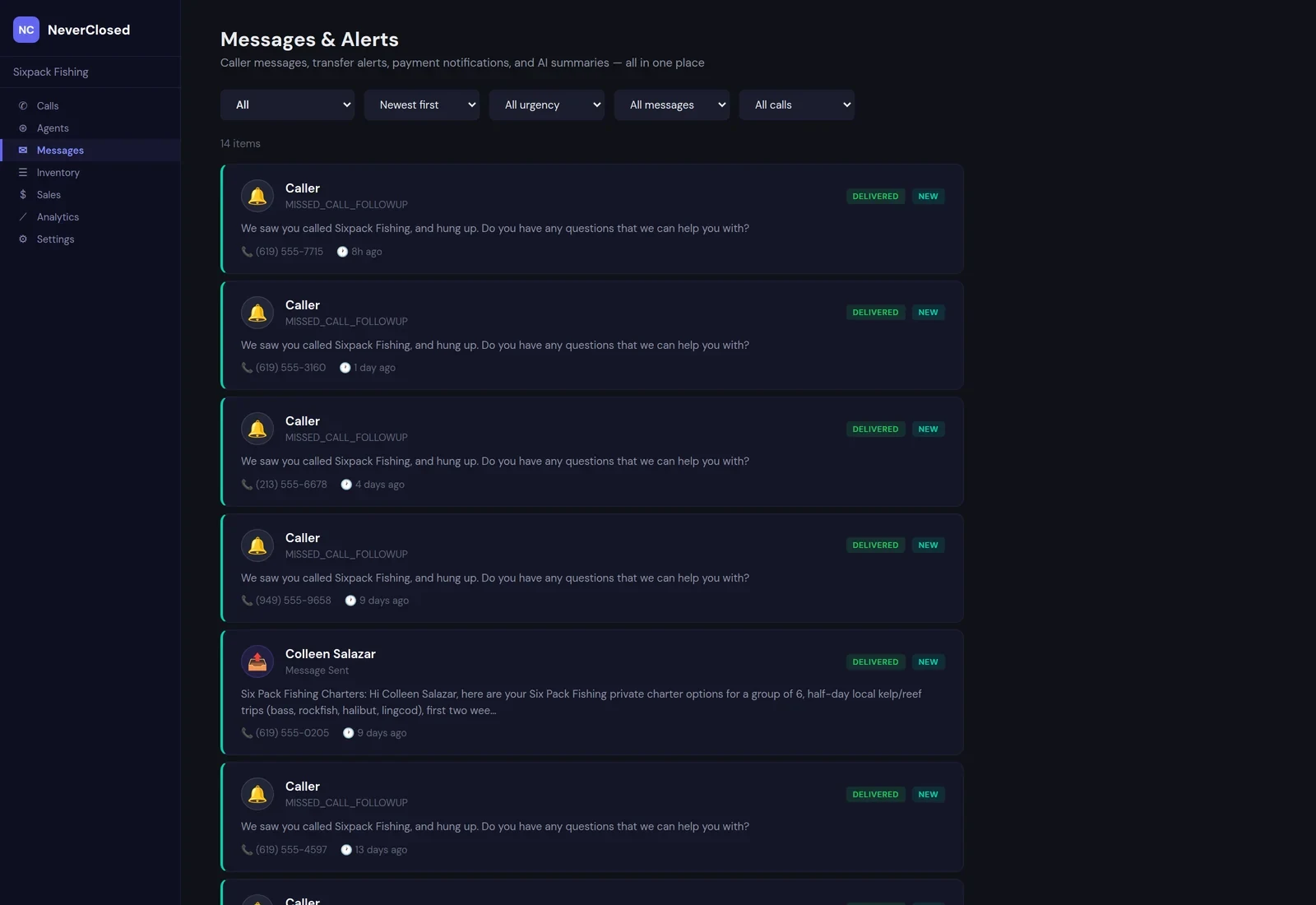
"Please leave a message after the beep." Those six words are costing businesses billions every year. Because here's the thing: most callers never make it to the beep. They hang up, they call your competitor and they never come back.
SEE IT IN ACTION
97 Out of 100.
Gone.
Why Voicemail is a Goodbye Message
Less than 3% of callers will leave you a voicemail. Think about that. For every 100 people who call your business and don't get an answer, 97 hang up without saying a word. You never know they called. Where do they go? 35% call a competitor. 30% search online instead. 20% give up entirely. The rest leave a bad review. Your voicemail greeting is not a safety net. It is a goodbye message.
The Psychology of the Voicemail Hang-Up
Why do people hate voicemail so much? It's not just impatience, there's a psychology behind it.
1. Voicemail Signals Uncertainty
When a caller reaches voicemail, they immediately face uncertainty: Will someone call back? When? Will they get the information they need? This uncertainty triggers decision paralysis and the easiest decision is to hang up.
2. The Effort-to-Outcome Gap
Leaving a voicemail requires effort: state your name, number, reason for calling, best time to reach you. But the outcome is uncertain, maybe they'll call back in an hour, maybe tomorrow, maybe never. The effort doesn't feel worth the uncertain reward.
3. The Instant Gratification Economy
We live in a world of same-day delivery, instant streaming and real-time everything. Voicemail is a relic of a slower era. When customers can get instant answers elsewhere, why would they wait for a callback?
When someone calls a business, they have a problem they want solved right now. Voicemail says 'your problem isn't important enough for us to handle immediately.' That's a devastating message.
, Customer experience researcher
What Happens After the Hang-Up
Let's follow the journey of a customer who hits your voicemail:
The 60-Second Customer Journey
They're interested, engaged, ready to book or buy.
Anticipation builds. They're mentally preparing their question.
Disappointment sets in. "They're not there."
80% have already hung up. The rest are debating.
They're already looking at your competitors.
Someone answers. Booking complete.
The entire decision to abandon your business and book with a competitor happens in under a minute.
Voicemail vs. AI: Side-by-Side Comparison
📭 Voicemail
- 80% of callers hang up (BIA/Kelsey)
- No questions answered
- No bookings possible
- Callback required (if they left message)
- Caller must wait hours or days
- No information captured if they hang up
- Operating hours only
- One language only
🤖 AI Phone Agent
- 99% of calls answered
- Questions answered in real-time
- Bookings completed on the call
- No callback needed
- Instant service
- Full conversation logged
- 24/7/365 availability
- 30+ languages supported
The Numbers Don't Lie
Here's how the two approaches compare in real-world performance:
| Metric | Voicemail | AI Agent |
|---|---|---|
| Calls successfully handled | ~20% | ~95% |
| Caller satisfaction | 2.1 / 5 | 4.6 / 5 |
| Booking conversion rate | 0% | 35-45% |
| After-hours capability | Message only | Full service |
| Information capture | Name, number (if left) | Full conversation data |
| Monthly cost | $0 | $250 |
| Revenue captured per month* | $0 | $8,000+ |
*Based on average tour operator handling 200 calls/month with 30% going to voicemail
But What About the "Personal Touch"?
The most common objection we hear: "But customers want to talk to a real person!"
Let's unpack that.
First: What customers actually want is their problem solved. If an AI can book their fishing trip, answer their questions about seasickness and send them a confirmation email in 90 seconds, they're happy. They didn't call because they wanted human connection, they called because they wanted a fishing trip.
Second: The "personal touch" of voicemail is actually impersonal. There's nothing personal about a recorded message that doesn't know who's calling or what they need.
Third: Modern AI sounds remarkably human. With natural language processing and realistic voice synthesis, most callers can't tell they're talking to AI and those who can generally don't care, as long as they're getting helped.
Real feedback from callers: "I honestly thought I was talking to a person until she mentioned she was an AI at the end. But honestly? It was one of the best customer service calls I've ever had. Fast, efficient, got exactly what I needed."
When Voicemail Makes Sense
To be fair, there are limited situations where voicemail still has a place:
- Existing customer follow-ups: When someone just needs to leave a quick note for a specific person they already have a relationship with.
- Internal communications: Team members leaving notes for colleagues.
- True emergencies with callbacks: When a customer has a genuine emergency and a human callback within minutes is guaranteed.
But for new customer inquiries? For booking requests? For sales calls? Voicemail is a revenue-killer.
The Real Cost Comparison
Let's do the math for a typical tour operator:
| Scenario | Voicemail | AI Agent |
|---|---|---|
| Monthly calls | 200 | 200 |
| Calls to voicemail | 60 (30%) | 0 |
| Messages left | 12 (20%) | N/A |
| Callbacks connected | 6 (50%) | N/A |
| Bookings from voicemail calls | 3 | 25 |
| Revenue @ $150/booking | $450 | $3,750 |
| Net gain vs. voicemail | , | +$3,050/month |
The AI agent costs $250/month. The revenue gain is $3,050/month. That's a 12x return on investment.
Making the Switch
If you're still relying on voicemail for new customer calls, here's what the switch to AI looks like:
- Day 1: Sign up and provide your business information
- Day 2-3: AI is trained on your services, pricing and FAQs
- Day 4: Test calls to verify quality
- Day 5: Go live, every call is answered
There's no hardware to install, no complex setup, no staff to train. Your phone number stays the same. The only thing that changes is that every call gets answered.
Ready to Retire Your Voicemail?
Hear exactly what your customers will experience when they call. No more hang-ups, no more lost bookings.
Get Your Free DemoThe Bottom Line
Voicemail was revolutionary in 1980. In 2025, it's a relic, one that's actively costing you customers and revenue.
Every "please leave a message" is a missed opportunity. Every hang-up is a customer going to your competitor. Every callback you make is time you could spend actually running your business.
AI phone agents aren't the future, they're the present. And the businesses that embrace them are capturing the customers that voicemail-dependent businesses are losing.
The beep is dead. Long live the AI.